Dementia affects over 200,000 Malaysians and a significant portion of Singapore’s elderly population today – a number expected to grow dramatically in the coming decades. For many families across Malaysia and Singapore, the thought of a loved one developing Alzheimer’s disease brings anxiety and worry. Yet there’s hopeful news: physical exercise is one of the most powerful, accessible tools available to delay and even prevent cognitive decline.
Unlike medication-based approaches, exercise has minimal side effects, improves overall health, and strengthens the bond between caregivers and their elderly loved ones. Whether your parent is 50, 70, or 85, it’s never too late to start moving toward better brain health. This guide walks families through the types of exercises that matter, how much activity is needed, and practical ways to encourage movement in the Malaysian and Singaporean context.
Why Exercise Matters for Brain Health
When we think of exercise benefits, we often picture stronger muscles or better heart health. But one of the most remarkable effects happens in the brain. Aerobic and resistance exercises increase blood flow to the brain, boost the production of brain-derived neurotrophic factor (BDNF)—a chemical that supports memory and learning—and reduce the accumulation of harmful proteins linked to Alzheimer’s disease. Research has consistently shown that adults who maintain regular physical activity are significantly more likely to preserve their cognitive abilities as they age. The good news: this protective effect can begin at any age, and even late-life exercise interventions show meaningful results.The Three Types of Exercises That Protect Cognitive Health
Aerobic Exercise: Building Heart and Brain Strength
Aerobic activities increase your heart rate and breathing, delivering oxygen-rich blood throughout the body and brain. These are among the most effective movements for dementia prevention. Recommended types:- Brisk walking (30 minutes daily or 150–300 minutes weekly)
- Light cycling or stationary biking
- Swimming or water aerobics
- Dancing (a particularly enjoyable option in Southeast Asian communities)
- Jogging or light running for those able
Resistance Training: Strengthening More Than Muscles
Strength training with weights, resistance bands, or bodyweight exercises offers unique cognitive benefits that complement aerobic activity. Studies suggest that combining resistance training with aerobic exercise produces superior results for brain health compared to either modality alone. Recommended activities:- Lifting light dumbbells or water bottles at home
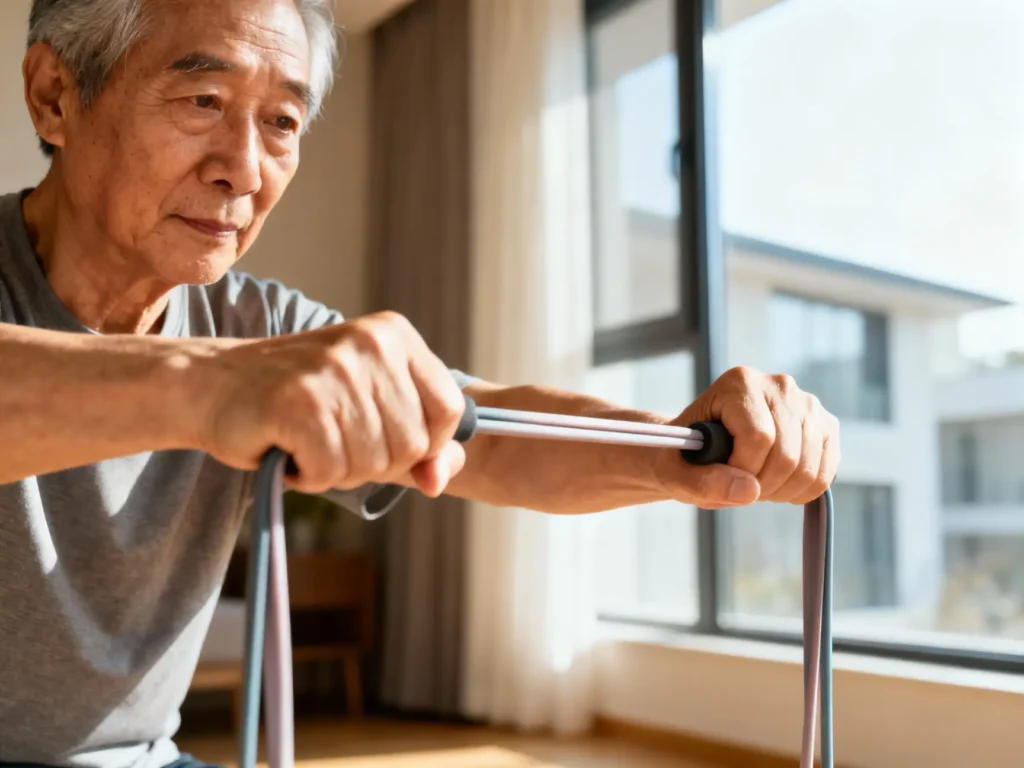
- Using resistance bands for upper body work
- Bodyweight exercises (squats, wall push-ups, step-ups)
- Tai Chi, which combines gentle resistance with balance training
- Community-based strength classes designed for older adults
Combined and Multicomponent Exercise: The Most Powerful Approach
The research is clear: combining aerobic exercise, resistance training, and balance work produces the most pronounced improvements in cognitive function. A nine-week study found that participants doing combined aerobic and strength training showed greater cognitive gains than those doing aerobic exercise alone. A practical combined routine might include:- 30 minutes of walking, three to four times per week
- Two sessions of light resistance training (15–20 minutes each)
- One session of balance or flexibility work like Tai Chi or gentle yoga